Compared to its competitors, CALD has less scale, inferior profitability metrics, and fishy accounting to boot. The stock’s valuation is so high that our DCF model can hardly make sense of it. The stock seems to be trading largely on the hopes of an acquisition.
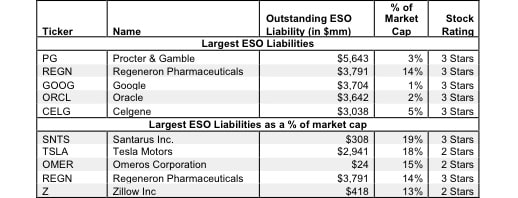
Without careful footnotes research, investors would never know the amount of employee stock options that decrease the amount of future cash flow available to shareholders by diluting the value of existing shares.
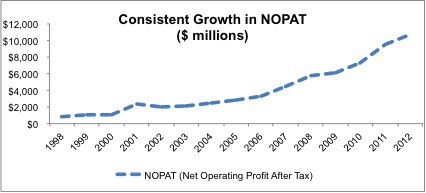
I am optimistic about the U.S. economy and I don’t believe we are in bubble. Too many investors and economists are looking at the economy the wrong way.
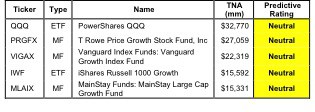
The large cap growth investment style ranks third out of the twelve investment styles as detailed in my style roadmap. It gets my Neutral rating, which is based on aggregation of fund ratings of all 771 funds in the style.
Over the past 10 years, ARBA appears as quite a success story and one of the few ‘internet bubble’ companies to survive and reach profitability, on a GAAP accounting basis at least. Looking beyond the reported accounting results, however, reveals that ARBA is not quite as profitable a company as it seems, and its valuation has out-grown its profits by a wide margin – the required combination of factors for making February’s list of most dangerous stocks.