HIDDEN GEMS:
1. Our discounted cash flow analysis shows that APOL’s current valuation (stock price of $42.31) implies that the company’s profits will decline by 60% and never grow again.
2. Economic earnings are higher than reported accounting earnings.
3. Excess cash of $1,201mm or about 20% of its market cap
Red flags:
1. Misleading earnings: BJRI reported a $3mm increase in GAAP earnings while our model shows economic earnings declined by $2mm (a difference of $5mm or nearly 40% of reported net income) during the last fiscal year.
2. Very dangerous valuation: stock price of $34 implies BJRI must grow its NOPAT at over 20% compounded annually for 15 years. A 15-year growth appreciation period with a 20%+ compounding growth rate sets expectations for future cash flow performance quite high. Historical growth rates are much lower.
3. Free cash flow was -$83mm or -11% of the company’s enterprise value last year.
4. Off-balance sheet debt of $265mm: 79% of net assets and 25% of market value.
5. Outstanding stock option liability of $44mm or 5% of current market value.
January’s Most Attractive Stocks are now available.
Technology and Pharmaceutical stocks predominate compared to other sectors. One newcomer to the list, Seagate Technology (STX), is actually an old friend. STX made
Retail and Financials are the most common stocks on our Most Dangerous Stocks list for January. Now that the holiday shopping season is behind us, we see little incremental upside in the retail and financial sectors.
We went on record that investors should short SBUX on 11/6/2006 when the stock was close to $38 per share. Click here to see the Fortune Article. The stock did not look attractive to us until 2 years (11/18 – 11/20/08) later when it was under $8, and that for only about 3 days. And ever since we have had a Neutral or Dangerous Rating on the stock.
HIDDEN GEMS:
1. Our discounted cash flow analysis shows that ACN’s current valuation (stock price of $48.59) implies that the company’s profits will decline by 9% and never grow again.
2. Economic earnings are higher than reported accounting earnings.
3. Excess cash of $3,728mm or about 12% of its market cap
RED FLAGS:
1. Misleading earnings: DFS reported a $295mm increase in GAAP earnings while our model shows economic earnings declined by $998mm (a difference of $1,293mm or over 100% of reported net income). The majority of the overstated reported earnings comes from a one-time gain from an anti-trust settlement of $1,892mm.
2. Very dangerous valuation: stock price of $19 implies DFS must grow its NOPAT at over 10% compounded annually for 40 years. A 40-year growth appreciation period with a 10%+ compounding growth rate sets expectations for future cash flow performance quite high. Historical growth rates have never been much lower.
3. Free Cash Flow was -$2,470mm or -26% of the company’s enterprise value last year.
4. Asset write-offs of $428mm or 5% of net assets – this means that management has written off at least $0.05 of assets for every $1 on the current balance sheet. Writing off assets is the opposite of creating shareholder value as it reflects management’s inability to derive any profits for the investments it makes with shareholder funds.
5. Off-balance sheet debt of $38mm or 0.5% of net assets.
6. Outstanding stock option liability of $8mm or less than 1% of current market value.
HIDDEN GEMS:
1. About $15 million in non-operating expenses (after-tax) cause reported earnings to be understated.
2. Our discounted cash flow analysis shows that ADI’s current valuation (stock price of $37.18) implies that the company’s profits will decline by 10% and never grow again.
3. The company grew its economic earnings by $283mm during its last fiscal year.
4. Excess cash of $2,462.5mm or nearly 25% of its market cap
The December version of our Most Attractive Stocks report is now available. Note that Barron’s recently recognized our Most Attractive Stocks portfolio as #1 over the prior 12 months amongst
The December version of our Most Attractive Stocks and Most Dangerous Stocks reports are now available for purchase. Note that Barron's recently recognized our Most Attractive Stocks portfolio as #1 over the prior 12 months amongst the best of the Wall Street research firms.
Ever wondered what it would be like to evaluate funds and ETFs with the same rigor that you can evaluate individual stocks - that is exactly what we deliver in the our Mutual Fund Rating and ETF Reports. Samples provided
While I cannot predict what WikiLeaks will leak about some major banks, I have a hunch that one of the revelations might be from a special New Constructs report provided to the Senate Banking Committee’s Subcommittee on Securities, Insurance, and Investment.
Red Flags:
1. Misleading earnings: JDAS reported a $14.6mm increase in GAAP earnings while our model shows economic earnings declined by $12.9mm (a difference of $27.5mm or 155% of reported net income).
2. Very dangerous valuation: stock price of $27 implies JDAS must grow its NOPAT at over 20% compounded annually for 10 years. A 10-year growth appreciation period with a 20%+ compounding growth rate sets expectations for future cash flow performance quite high.
3. Free Cash Flow was -$203mm or -15% of the company’s enterprise value last year.
4. Asset write-offs of $21mm or 3% of net assets – this means that management has written off at least $0.03 of assets for every $1 on the current balance sheet. Writing off assets is the opposite of creating shareholder value as it reflects management’s inability to derive any profits for the investments it makes with shareholder funds.
5. Off-balance sheet debt of $40mm or 6% of net assets.
6. Outstanding stock option liability of $13mm or 1% of current market value.
HIDDEN GEMS:
1. About $29 million in non-operating expenses (after-tax) cause reported earnings to be understated.
2. Our dis¬counted cash flow analy¬sis shows that TRV’s cur¬rent val¬u¬a¬tion (stock price of $55.49) implies that the company’s profits will decline by 30% and never grow again.
3. The company grew its economic earn¬ings by $827mm during its last fiscal year.
Contrary to nearly every headline you read about monetary policy these days, I believe it is quite possible the Fed Chairmen Ben Bernanke is performing quite well and much better than any of his recent predecessors. In fact, I think he is directing monetary policy with unprecedented precision and skill.
HIDDEN GEM: Our detailed valuation model shows that WDC grew its “economic” profits by 226% while accounting profits grew 194% during its last fiscal year. Economic profits rose by $769mm while accounting profits rose by $912mm.
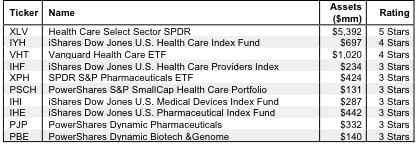
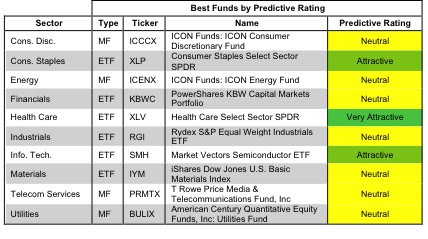
Today we initiated coverage of ETFs for all major sectors and Indices. Free samples of the initiation reports are here. These reports deliver strategic insights into entire sectors and markets.
Maintaining artificially low interest rates or excessive money supply does permanent damage to economies in the medium and long-term because it delays creative destruction, the process of replacing low-return investments with higher-return investments. To help illustrate this point, I present the “Investment Opportunity Schedule” in Exhibit 1
RED FLAGS:
1. Misleading Earnings: AKAM reported a $1mm increase in GAAP earnings while our model shows economic earnings declined by $10mm (a difference of $11mm or 7% of reported net income).
2. Very Dangerous Valuation: Stock price of $47 implies AKAM must grow its NOPAT at over 20% com¬pounded annu¬ally for 15 years. A 15-year growth appreciation period with a 20%+ compounding growth rate sets expectations for future cash flow performance quite high.
3. Asset write-offs of $2,000mm or 102% of Net Assets – this means that management has written off at least $1 of assets for every $1 on the current balance sheet. Writing off assets is the opposite of creating shareholder value as it reflects management’s inability to derive any profits for the investments it makes with shareholder funds.
4. Off-balance sheet debt of $128mm or 7% of Net Assets.
5. Outstanding Stock Option Liability of $212mm or 3% of current market value.
The Risk/Reward of the entire S&P 500 gets our Neutral Rating. Our recently published Index Benchmark report on the S&P 500 offers unique insights into the underlying profitability and valuation of all the companies comprised by this index. It also offers benchmarks for (1) investors considering buying ETFs or Index Funds based on the S&P 500 and for (2) comparing individual stocks to the S&P 500.